Service
Air Duct Cleaning
What the visit covers, what it excludes and what drives the price.

Questions
The things people ask before booking, answered plainly — including the ones where the honest answer is less flattering than the industry norm.
The one we get most
Often, no. A system with visible debris, one that ran through a remodel, or one nobody has ever looked at is usually worth cleaning. A system that is simply a few years old frequently is not. The inspection is free precisely so that answer costs you nothing to find out.
The work itself
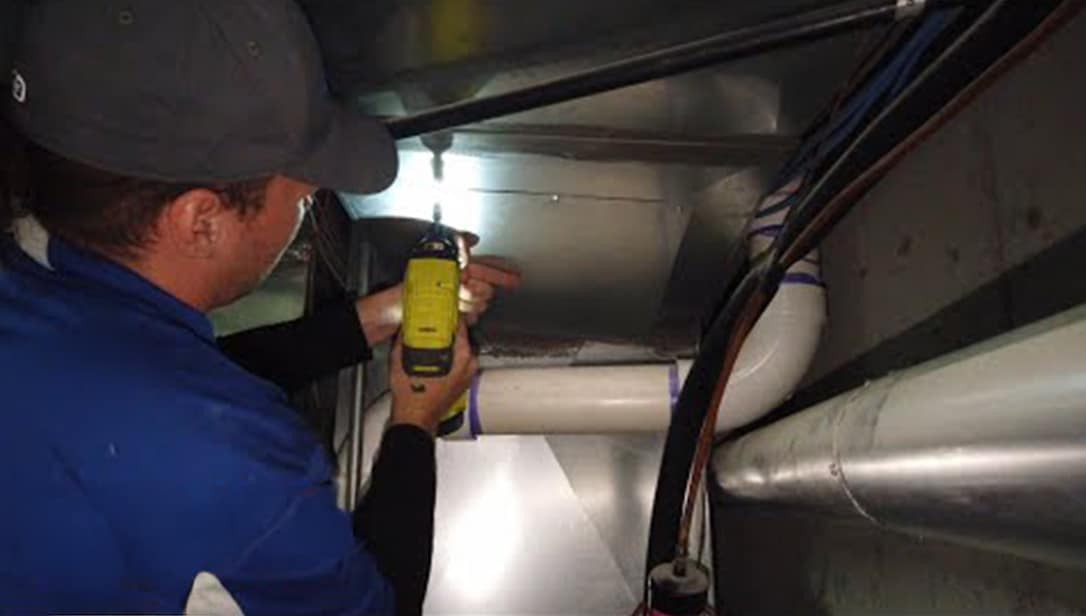
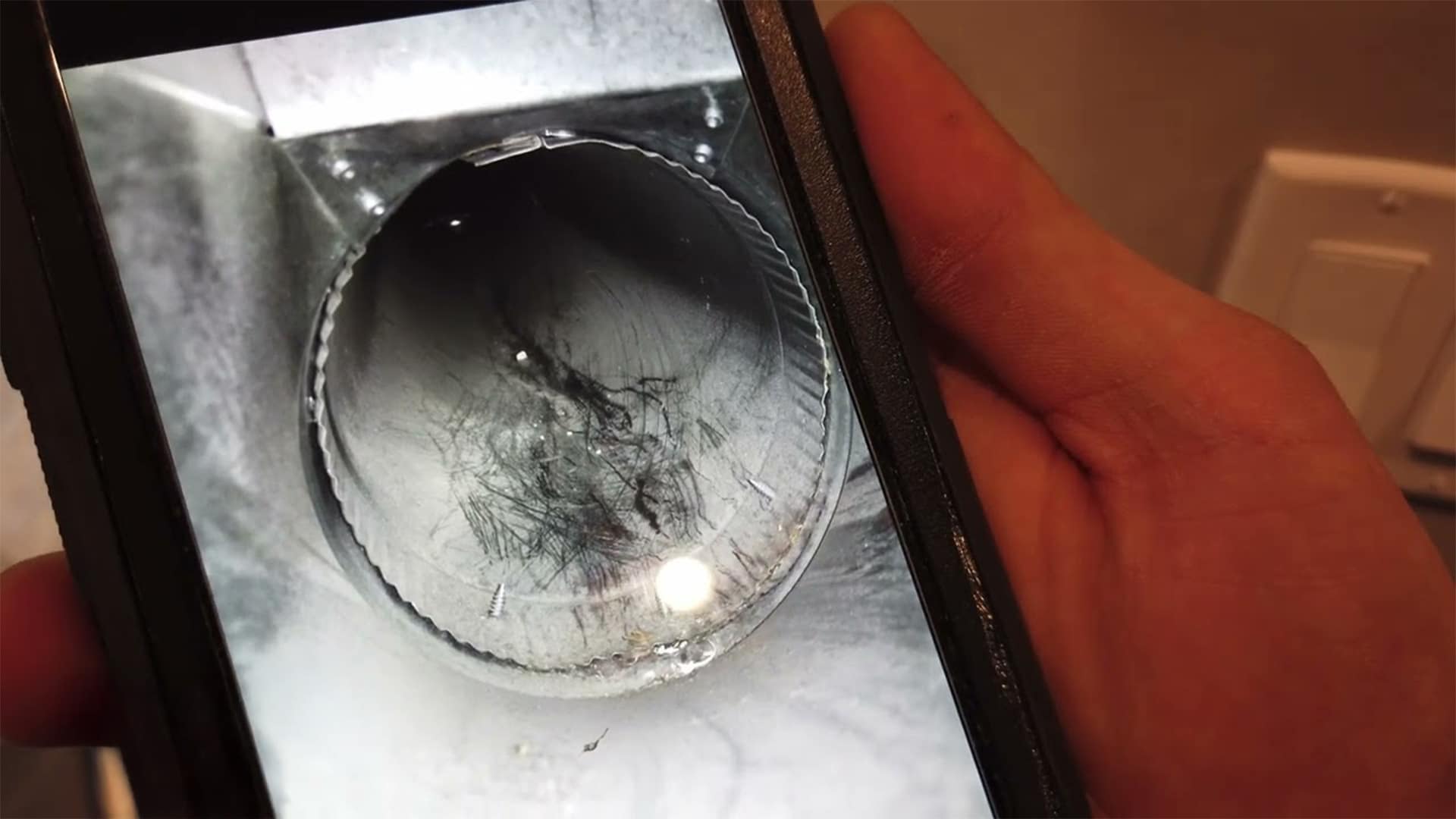
A technician feeds a camera into the accessible ductwork to see the condition first. Where cleaning is warranted, agitation tools loosen material from the duct walls while truck-mounted negative air draws it out through the trunk lines. The collection unit stays outside the occupied space wherever the property allows.
Most single-system homes are a matter of hours rather than a full day. Timing depends on the number of systems, how many supplies and returns there are, how accessible the ductwork is, and what the inspection finds. You will get a realistic window before you schedule.
It should not be. Floor protection goes down, hoses are routed through a door or window, and the debris travels out to the collection unit rather than into the room. If someone is cleaning ducts in a way that leaves a mess behind, something has gone wrong with the setup.
Not strictly, but it helps. The most useful part of the visit is usually the walkthrough at the end, and being able to ask questions while a technician is standing at your system is worth more than a summary afterwards.
Truck-mounted negative air collection, rotary agitation tools sized to the duct, and inspection cameras. The equipment that travels to a job is decided by the system details you give us when booking, which is why we ask.
Yes. Commercial buildings vary widely in equipment count, access and scheduling requirements, so send us the property details and we will confirm what we can take on.
Deciding
There is no interval that fits every property, and a company quoting one before seeing your system is guessing. It is more useful to look periodically and clean when there is a documented reason: visible accumulation, a remodel that put debris into the system, pest activity, or a change in how the system runs.
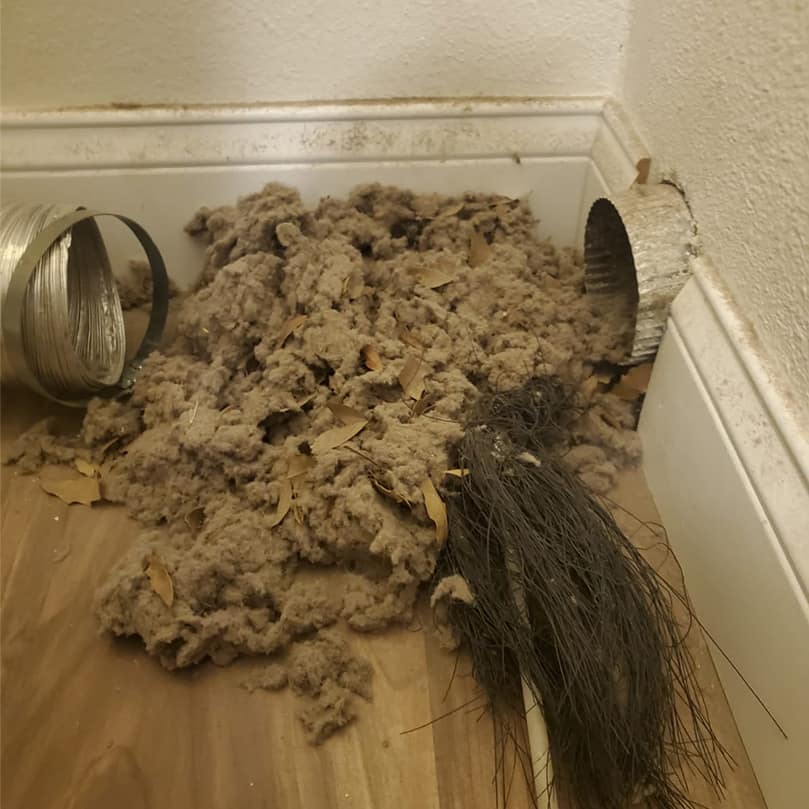
Visible debris at registers, material you can see inside accessible ductwork, dust returning quickly after cleaning, a recent remodel, or pest activity. Dust on a vent cover alone does not prove the whole system needs work, which is why the inspection matters.
Where a run is genuinely restricted by accumulated material, removing it helps. Where airflow problems come from duct leakage, undersized returns, a dirty filter or the equipment itself — which is common — cleaning will not fix them. The inspection tells you which you have.
We do not claim that. Cleaning removes accumulated dust and debris from the accessible duct system, which is measurable and worth doing when there is material to remove. Research on health outcomes is mixed, and if indoor air quality is the concern, filtration, humidity and the building envelope usually matter more than duct cleanliness.
Sometimes, if the source is material sitting in the ductwork. Often the source is elsewhere — moisture, a dead animal in a wall cavity, the equipment itself, or something in the house — and cleaning the ducts will not touch it. We will tell you what we find rather than guess.
We do not put a figure on that and would be wary of anyone who does. Savings depend on how restricted the system was to begin with, and the honest position is that we cannot predict it for your property.
Still deciding?
The inspection is free, and it is genuinely fine for the answer to be that nothing needs doing.
Other services
No. The dryer vent is a separate run with its own access points and its own equipment, so it is quoted separately. Many customers book both in one visit, which is easier than two appointments.
It depends on how much laundry the household does, how long the run is and how many bends it has. Rather than working from a calendar, watch drying times: when a normal load starts needing two cycles, the run is telling you something.
No, and we would push back on anyone who tells you it automatically is. Sealing is for runs that have corroded or deteriorated so the surface itself is the problem. A duct that was simply dirty needs cleaning and nothing more.
No. We do not test for mould, identify it, or remediate it. If we see staining or damp that concerns us we will show you and recommend someone qualified to assess it, because cleaning does not address whatever moisture allowed it to grow.
Ask what is included and get it in writing. Be wary of very low advertised prices that grow once someone is at the property, of companies that diagnose mould without testing, and of chemical treatment sold as standard. A company willing to tell you that you do not need the work is usually a good sign.
Get in touch
Share the property type, what you have noticed, and any recent remodeling or HVAC changes. We will confirm coverage and follow up about the right next step.