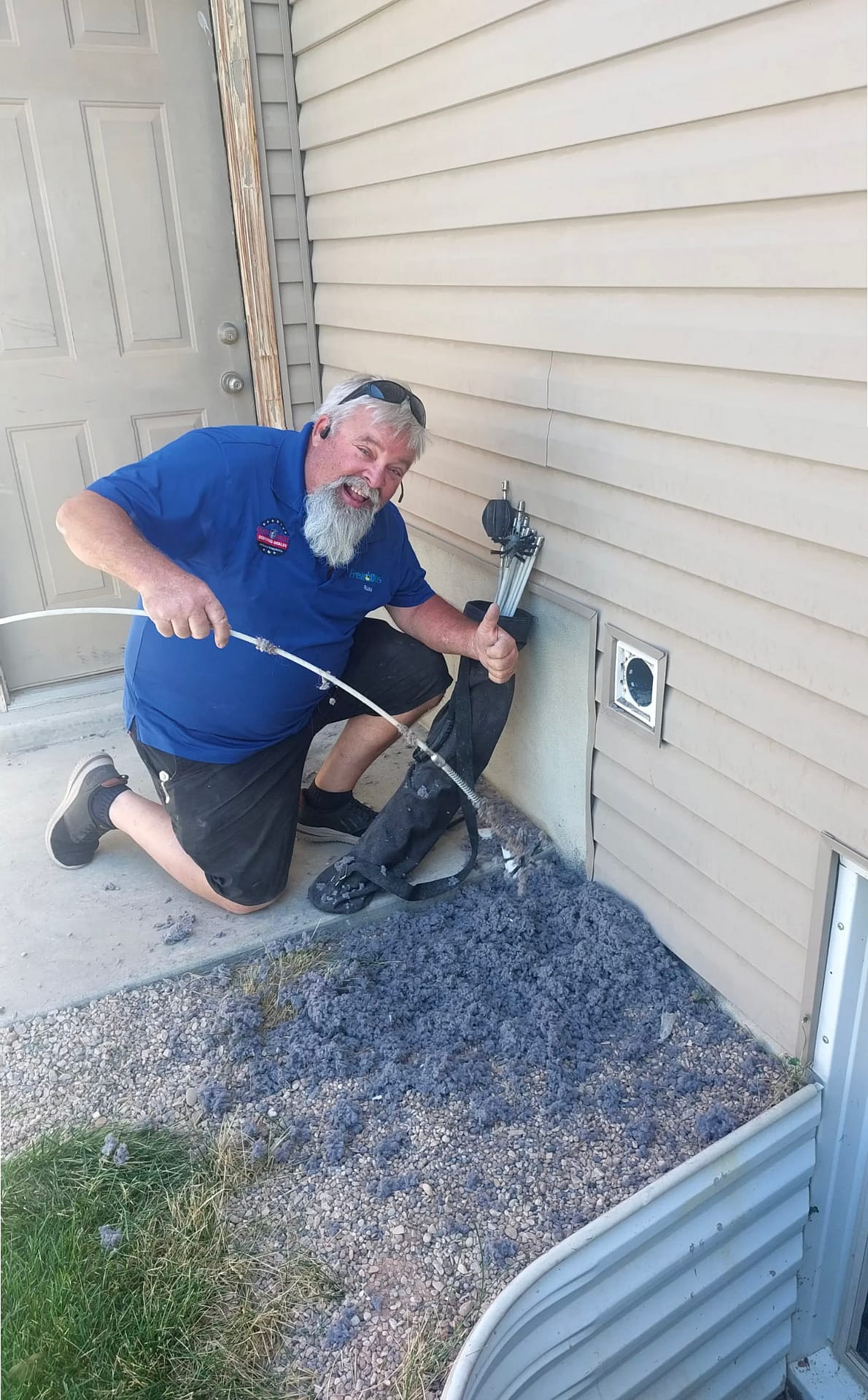
If a load takes two cycles to dry, the vent run is usually the reason. We clear the whole run from the dryer to the exterior hood and show you what came out.
Free inspection firstWhole run, dryer to hoodQuoted separately from duct cleaningWeber, Davis and Salt Lake
Start here
Signs the vent run is restricted
Nobody thinks about a dryer vent until the dryer stops behaving. These are the things customers describe just before they call us.
A normal load needs two cycles, or a long extra run to finish
The laundry room is noticeably warm or humid while the dryer runs
Clothes come out hotter than usual at the end of a cycle
Lint is collecting around the dryer, the door seal, or the exterior hood
The exterior flap does not open fully, or does not open at all
It has been years, or nobody knows, since the run was last cleared
The short answer
What dryer vent cleaning involves
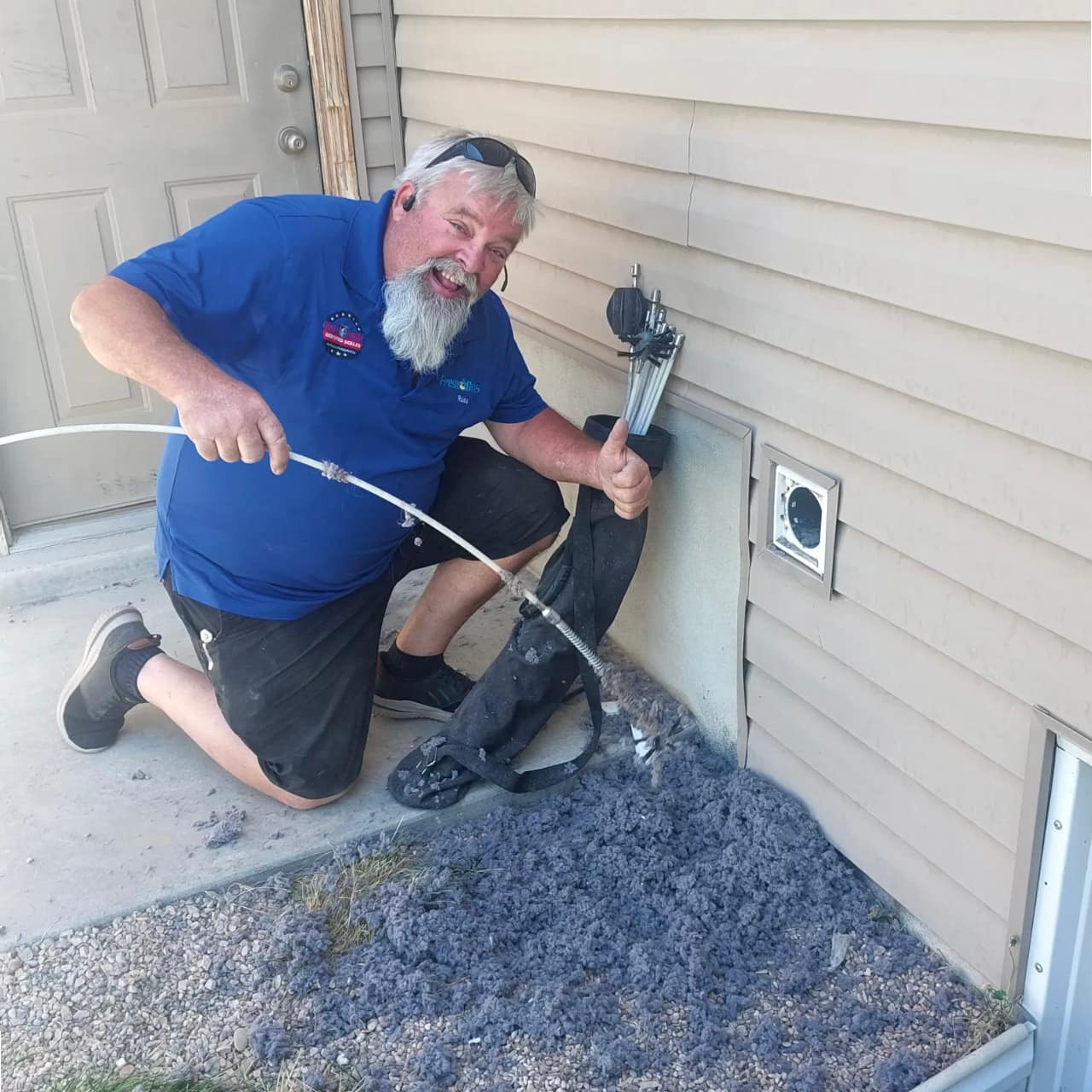
We disconnect the dryer, clear the transition behind it, and work the full duct run out to the exterior hood using rotary brushing and vacuum extraction. We check that the exterior flap opens freely, reconnect the dryer, and confirm it is venting properly before we leave. You see the lint that came out.
The dryer vent is a separate run from your HVAC ductwork, with its own access points and its own equipment, so it is quoted separately from air duct cleaning. Many customers book both in one visit.
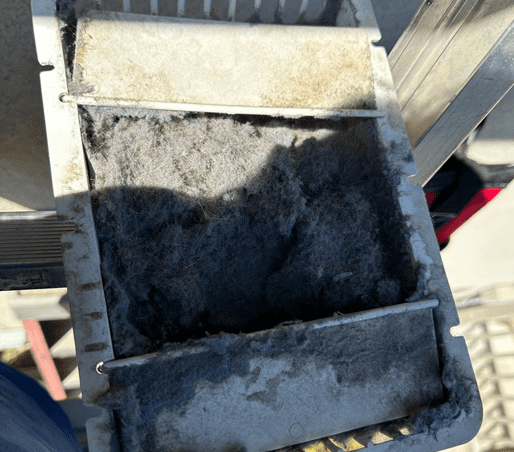
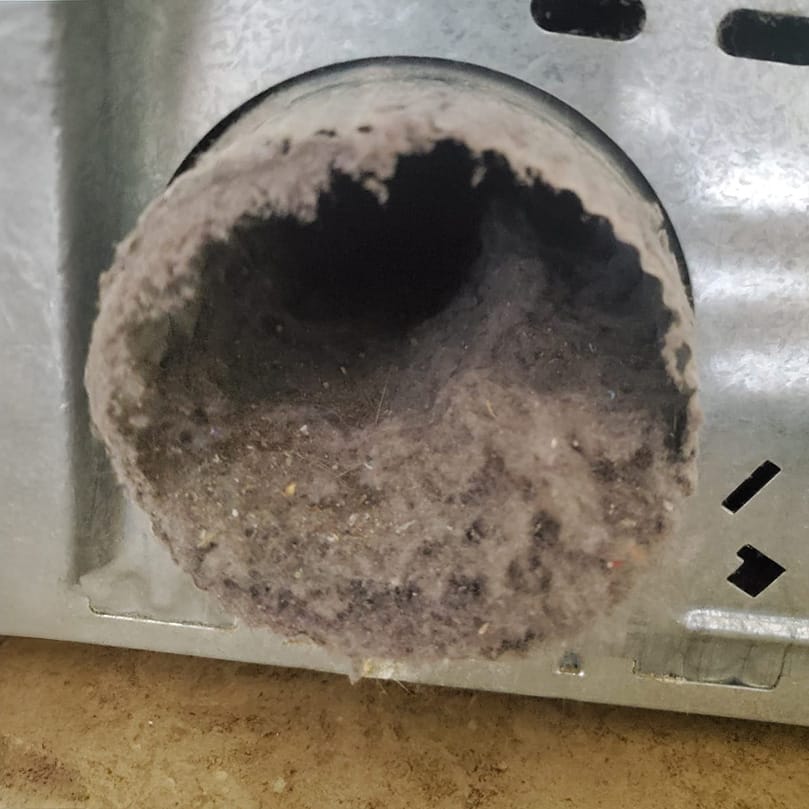
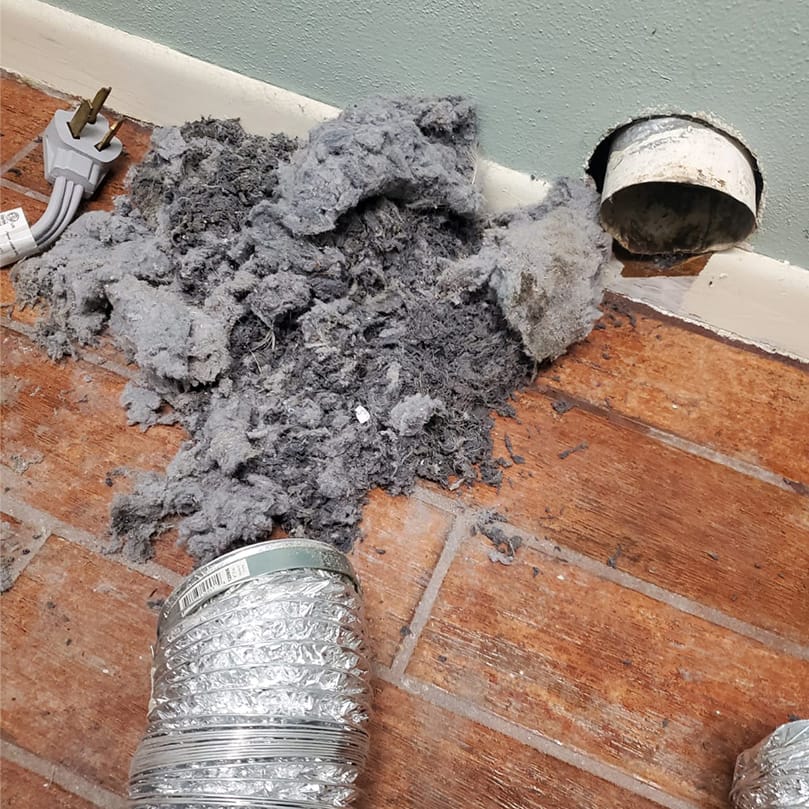
A transition piece packed solid. Airflow through this is close to nothing.The inside of a duct run, coated the whole way around.Working from the exterior hood so the lint leaves the building.One run, collected. Volume varies with length and how long it has been.The pile on the ground is the honest measure of the job.Accumulation at an opened connection point.
Know exactly what you get
Everything included in a dryer vent visit
Included
Disconnecting the dryer and clearing the transition behind it
Rotary brushing and vacuum extraction of the full duct run
Clearing the exterior hood and checking the flap opens freely
Reconnecting the dryer and confirming it is venting properly
Showing you the material removed before we leave
Not included
Dryer repair, part replacement or appliance servicing
Rerouting, shortening or replacing a poorly installed duct run
Cutting into walls or ceilings to reach an inaccessible run
HVAC duct cleaning, which is a separate service and separate quote
Roof-terminated runs where safe access is not available
Two cycles to dry?
Have someone look at the run.
The inspection is free, and it tells you whether the problem is the vent or the appliance.
A ground-floor dryer venting straight through an exterior wall is a very different job from a run crossing a house.
02
Where it terminates
Wall terminations are straightforward. Roof terminations need safe access and take longer.
03
Bends in the duct
Every elbow slows airflow and collects lint, and adds work to clear properly.
04
Access to the dryer
Stacked units, tight closets and built-in cabinetry all add time before any cleaning starts.
05
Condition found
A run that has never been cleared holds far more than one done a couple of years ago.
06
Booked with duct cleaning
Doing both in one visit is usually more economical than two separate appointments.
Why a clear vent run matters
A dryer works by moving heated air through wet clothes and pushing the moisture outside. Everything in that job depends on air actually leaving the building. When lint narrows the run, less air moves, moisture stays in the drum, and the machine compensates by running longer.
What you will notice first
Drying times stretch. A load that used to take one cycle needs a second. The laundry room feels warm and humid while the dryer runs, because the moisture that should be going outside is staying inside. Clothes come out hotter than they used to.
Why the lint trap is not enough
The lint trap catches a good share of what comes off your clothes, but not all of it. What passes through settles along the duct walls, and it accumulates fastest at bends and at the transition behind the dryer, where the airflow changes direction. Cleaning the trap after every load is worth doing and does not reach any of that.
How often it is worth repeating
It depends on how much laundry the household does, how long the run is, and how many bends it has. A large family with a long run may want it looked at yearly; a couple with a short wall termination can go considerably longer. Rather than working from a calendar, watch the drying times: when they start creeping up, the run is telling you something.
Common questions
Dryer vent cleaning questions
How do I know my dryer vent needs cleaning?
The clearest sign is drying time. If a normal load needs two cycles, or the dryer runs noticeably longer than it used to, the run is worth checking. Lint collecting around the dryer or the exterior hood, a laundry room that feels humid while the dryer runs, and an exterior flap that does not open fully all point the same way.
How long does it take?
Most residential runs take under an hour once we have access to the dryer. A long run, a roof termination, or a stacked unit in a tight closet takes longer. The inspection tells you what to expect before you book.
How much does it cost?
It depends on the length of the run, where it terminates, how many bends it has, and how accessible the dryer is. We do not publish a flat price because a short wall termination and a run crossing a house are not the same job. Booking it alongside duct cleaning is usually more economical than two visits.
Is it included with air duct cleaning?
No. The dryer vent is a separate run with its own access points and its own equipment, so it is quoted separately. Plenty of customers schedule both in one visit, which is easier than two appointments.
Can I clean it myself?
You can reach the transition behind the dryer and the first stretch of duct with a brush kit, and that is genuinely worth doing. What a kit will not reach is a long run, the bends where lint collects most, or the exterior hood. If drying times are not improving after a home attempt, the restriction is further along.
I clean the lint trap every load. Is that not enough?
It helps, and it is worth continuing, but the trap does not catch everything. What passes through settles along the duct walls and builds up at bends and at the transition. That accumulation is what a vent cleaning addresses.
What if the duct run itself is the problem?
It sometimes is. Runs that are too long, have too many bends, use flexible foil duct, or were crushed behind the dryer will keep restricting airflow no matter how clean they are. We will tell you if that is what we find, and that is a job for whoever can reroute it rather than for us.
Do you work on roof-terminated vents?
Where safe access is available, yes. If it is not, we will say so rather than improvise, and you will not be charged for a job we could not do properly.