
What to know
Run it before you need it
Once outdoor temperatures are reliably above about 60°F, set the thermostat to cool and let the system run for thirty minutes. Listen to it, and walk the house feeling the registers.
That temperature guard matters. Most air conditioners are not built to run in cold outdoor conditions, and testing one on a chilly day risks harm rather than telling you anything useful. Check the manufacturer's instructions for your unit, since the minimum varies.
If something is wrong you now have weeks to sort it out, rather than finding out on the first hot day when appointment times are scarce.
The filter, again
A filter that spent the winter working is not going to do well in summer. Cooling pulls a lot of air through the system, and a restricted filter shows up faster in July than it ever did in January.
Check it rather than trusting the date on the frame. Compare it against a new filter of the same type: heavy, even discolouration and visible loading across the pleats is what you are looking for. Do not judge by holding it up to a light — a dense pleated or high-MERV filter blocks light when it is brand new, so that test condemns perfectly good filters.
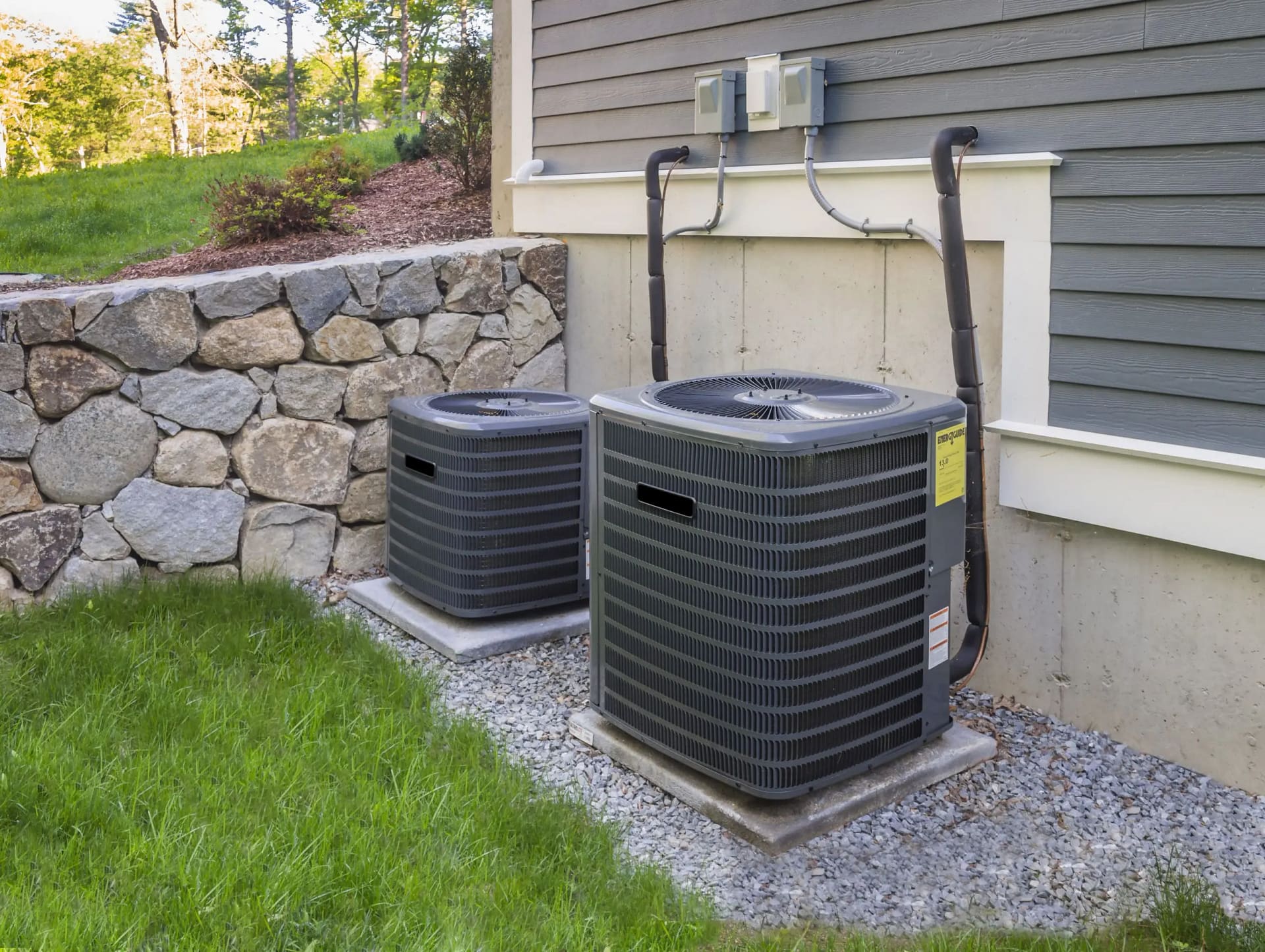
Give the outdoor unit room
- Clear leaves, cottonwood fluff and grass clippings from the fins.
- Cut back anything growing within a couple of feet of it.
- Move stored items that ended up leaning against it over winter.
- Check that it is sitting level and has not settled on one side.
The outdoor unit has to dump heat into the air around it. Anything packed against it is asking it to work harder for the same result.
Walk the registers
Open every supply register, including in rooms you do not use, and pull the furniture off the return grille. Cooling is more sensitive to restricted airflow than heating is, so the vent somebody closed in February will be more noticeable now.
While you are at each one, look inside the opening. If you can see build-up on the register face or just past it, that is worth mentioning to whoever services the system.
What is worth a professional look
- Airflow that is noticeably weaker than last year with a fresh filter fitted.
- A room that cooled fine last summer and does not now.
- Visible debris inside the ducts, particularly after any remodelling work.
- New noises when the system starts or shuts down.
If any of those apply, having somebody look at the accessible ductwork before the season gets going is a reasonable use of an hour. The inspection is free, and finding nothing wrong is a perfectly good outcome.